
Houbolt Road Extension: Leveraging Design-Build and Innovative Financing to Accelerate Economic Growth at America’s Largest Inland Port
By Mike Mack, National Design-Build Design Director, Burns & McDonnell
At a Glance
Location: Joliet, Illinois
Project Type: Roadway & Bridge (Intermodal Freight Connector)
Delivery Method: Design-Build (First Transportation Design-Build in Illinois)
Delivery Partners: Kenny Kraemer Team JV with Burns & McDonnell serving as Designer of Record
Structure: Public-Private Partnership (P3)
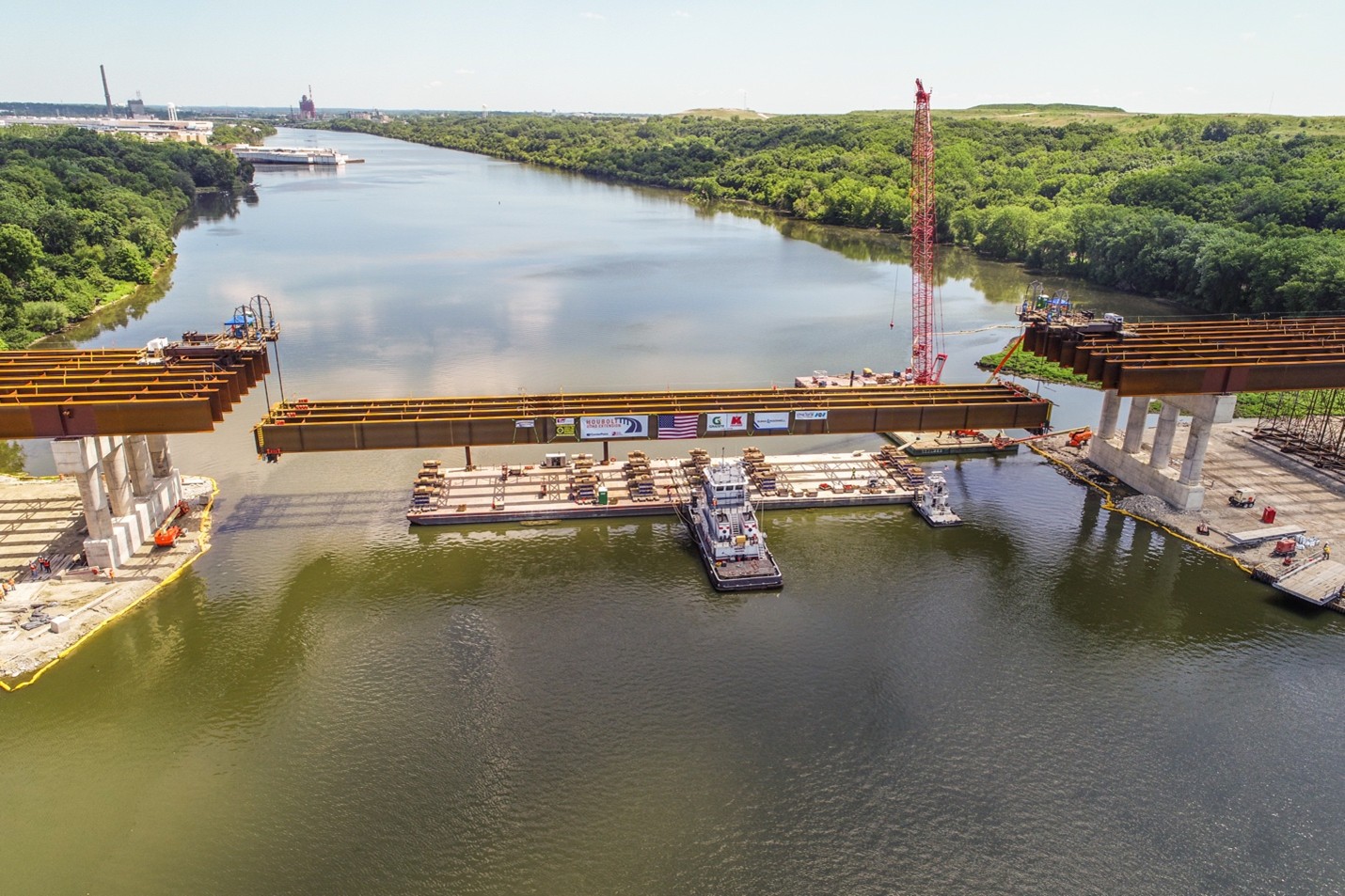
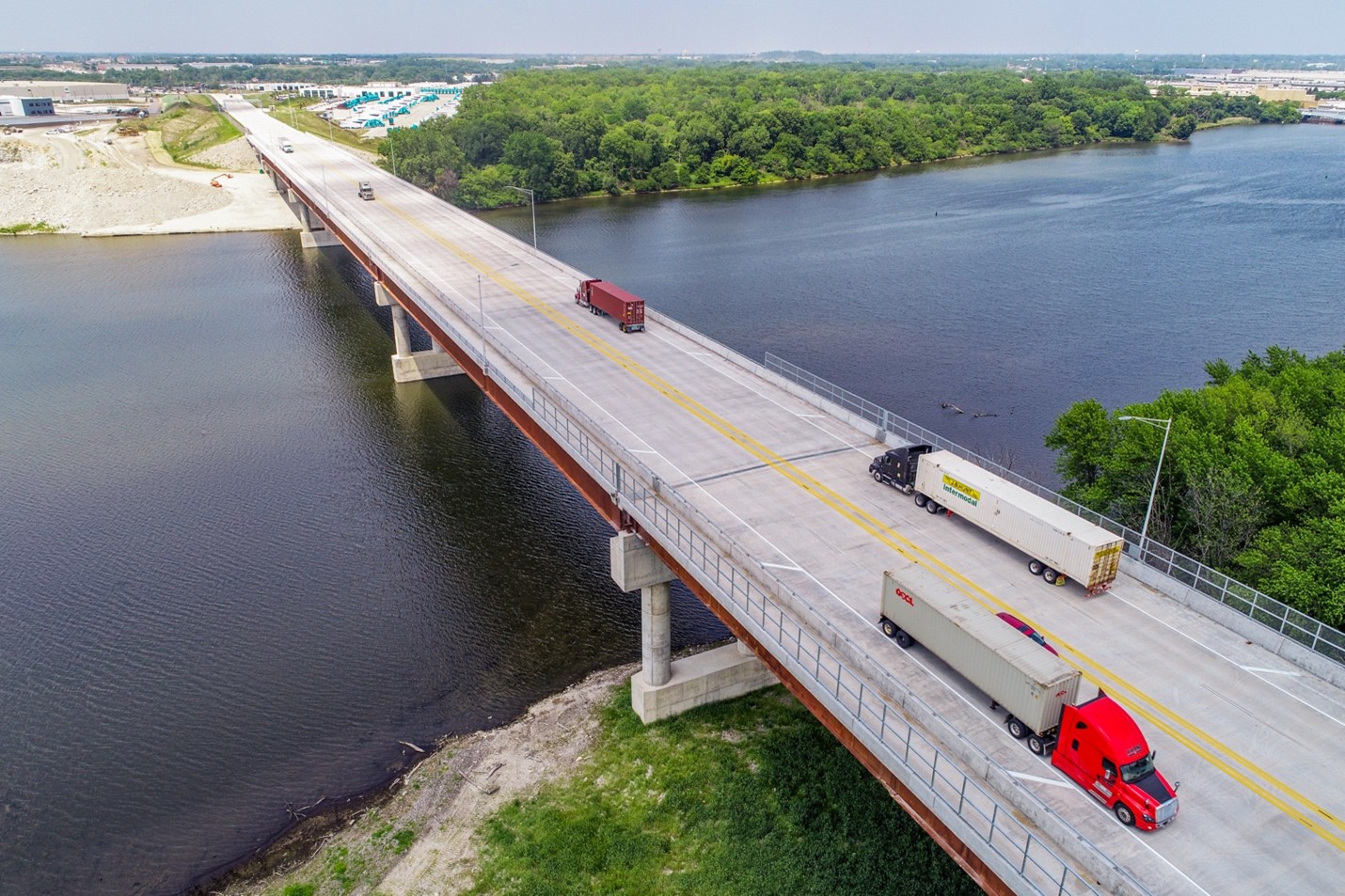
Key Feature: 1,900-ft bridge over Des Plaines River & BNSF Railway
Primary Benefit: Direct access from CenterPoint Intermodal Center to I-80
Delivering Critical Freight Connectivity
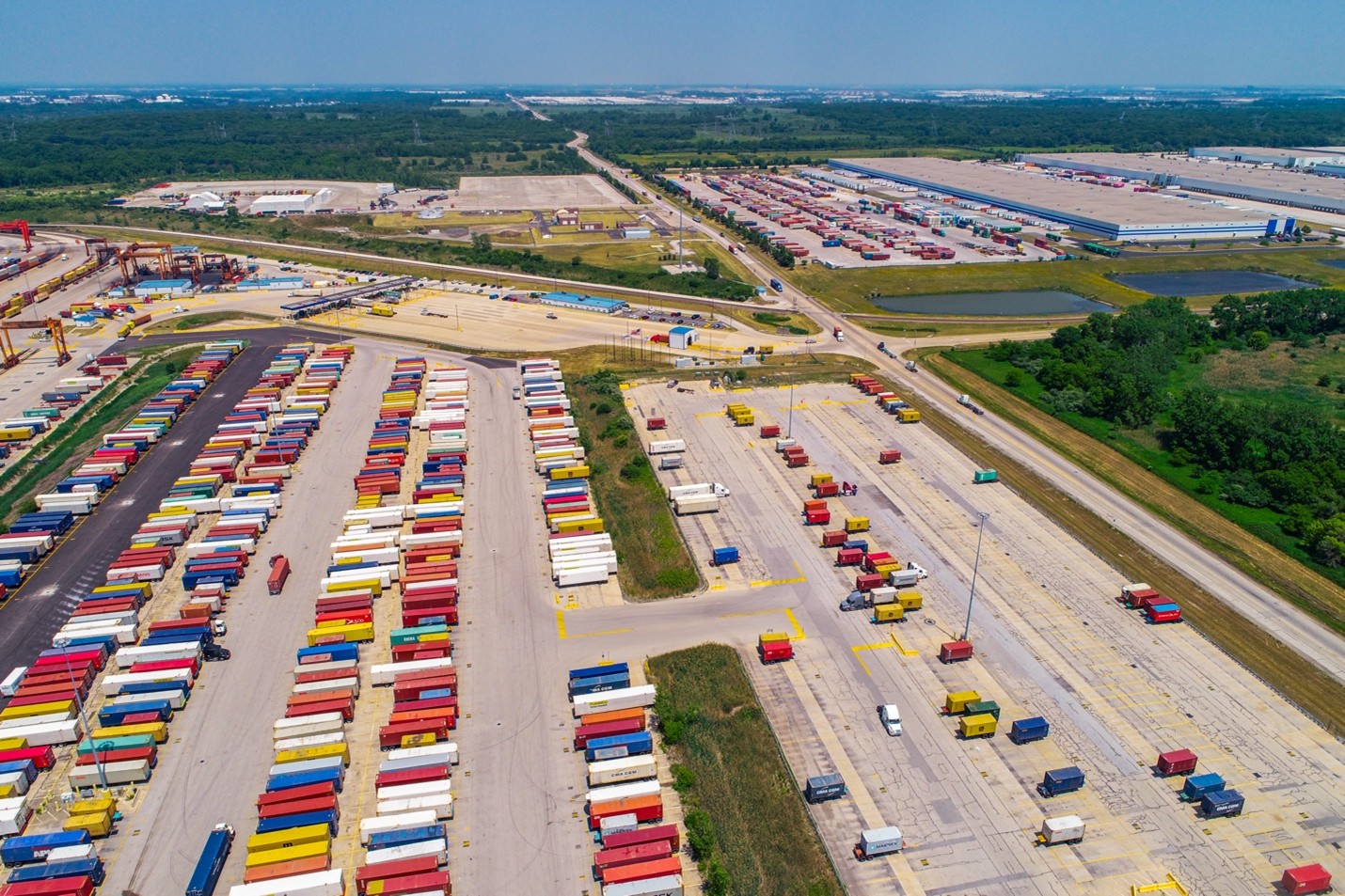
Located 40 miles southwest of Chicago, the Houbolt Road Extension (HRE) project sits at the heart of one of North America’s most important freight corridors. The project provides a direct connection between the CenterPoint Intermodal Center—widely recognized as the largest inland port in the United States—and Interstate 80, addressing long-standing bottlenecks impacting both roadway and rail-served freight movement.
At its core, the project consists of a 1.5-mile roadway extension and a 1,900-foot, eight-span bridge crossing the Des Plaines River and the BNSF Railway, designed to improve safety, reduce congestion, and enhance regional freight mobility.
Prior to the project, as many as 20,000 trucks per day navigated local roads not designed for heavy freight traffic, creating safety concerns, congestion, and inefficiencies for both the logistics industry and surrounding communities.
The Houbolt Road Extension was conceived to solve these challenges—but delivering it required more than engineering. It required a new approach to funding, delivery, and collaboration.
Innovative Funding Structure: A New Model for Freight Infrastructure
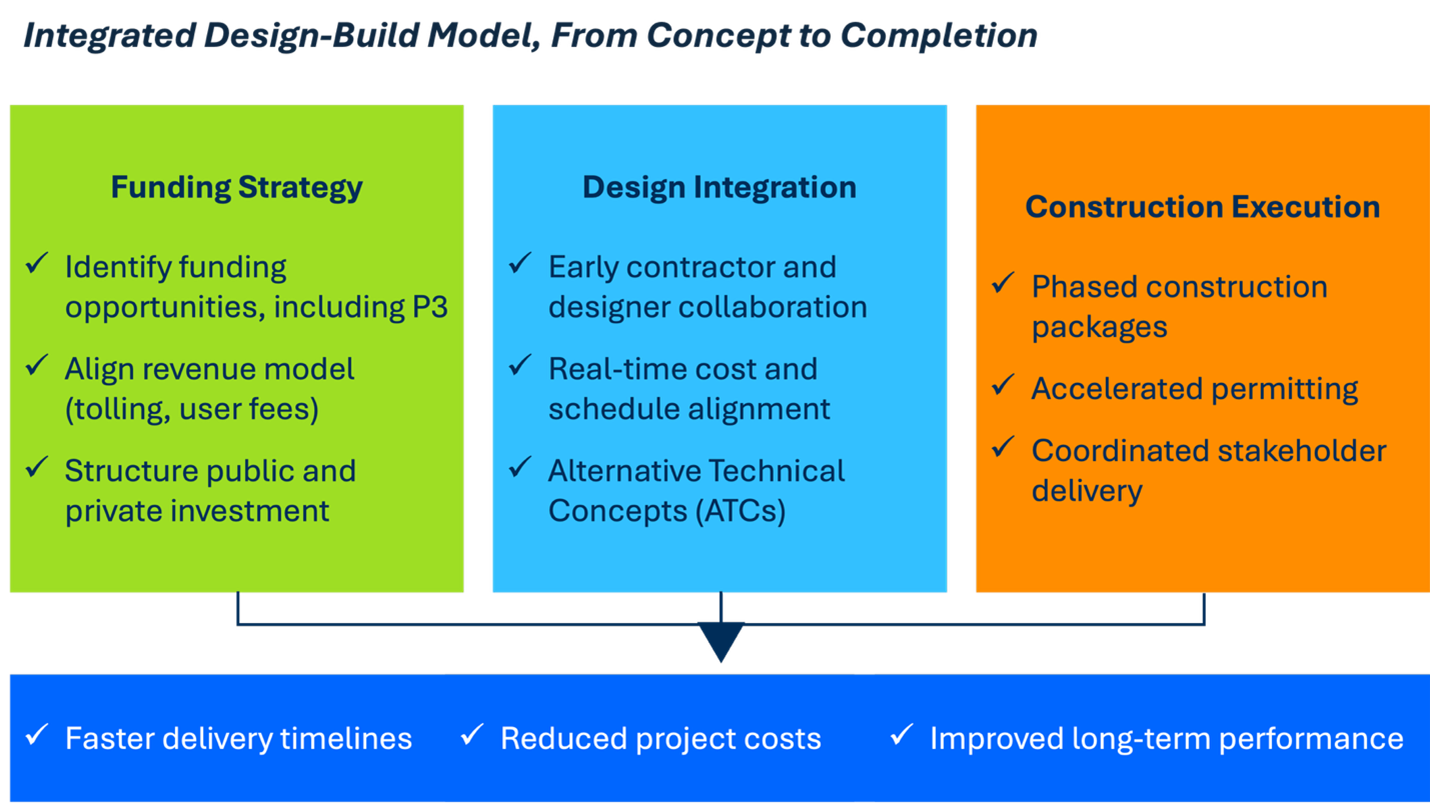
The Houbolt Road Extension represents a landmark public-private partnership (P3) and the first transportation project in Illinois delivered under a design-build model, enabled through targeted legislative action.
The project’s funding structure reflects a growing trend in freight infrastructure delivery:
- Approximately $150M–$170M in private equity investment from CenterPoint Properties and United Bridge Partners
- 21M–$32M in public funding focused on supporting roadway and interchange improvements
- Revenue generated through user-based tolling, primarily from freight traffic
This model was intentionally designed to bridge the funding gap for critical freight infrastructure—particularly projects where traditional public funding mechanisms struggle to keep pace with rapid logistics growth.
From a rail and intermodal perspective, this structure is especially important. Freight infrastructure tied to rail hubs often delivers regional and national economic benefits, but the direct funding sources are fragmented. By combining private capital with toll-backed revenue, the HRE model aligns infrastructure investment directly with freight system demand.
Economic Development: Unlocking Rail-Driven Growth
While the Houbolt Road Extension is a roadway project, its greatest impact is on rail-connected economic development.
Strengthening a National Freight Hub
The CenterPoint Intermodal Center supports millions of twenty-foot equivalent units (TEUs) annually and connects directly to major Class I railroads, including BNSF and Union Pacific. The Houbolt Road Extension provides a direct, high-capacity link to I-80, eliminating critical bottlenecks.
By providing direct, high-capacity access to I-80, the HRE project:
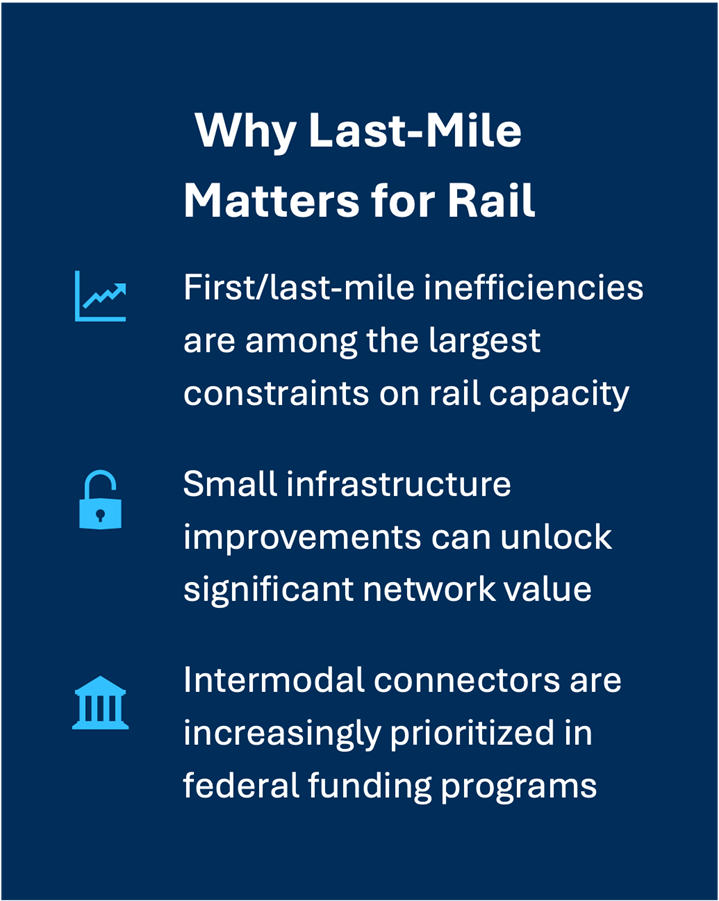
- Eliminates critical first/last-mile bottlenecks between rail terminals and the interstate system
- Reduces truck travel times by approximately 20–25 minutes per trip
- Improves reliability of freight movement across the broader rail network
This type of last-mile connectivity is increasingly recognized as one of the highest-value investments in freight rail systems, where relatively small infrastructure improvements can unlock significant throughput gains.
Enabling Industrial Expansion
The improved access provided by the Houbolt Road Extension has positioned the Joliet/Will County region for:
- Expansion of rail-served industrial and logistics facilities
- Increased demand for warehouse and distribution space
- Conversion of thousands of acres to industrial use near the corridor
From a site selection standpoint, proximity to high-efficiency intermodal facilities with direct interstate access is one of the most critical drivers of investment. The HRE project enhances that value proposition significantly.
Driving Measurable Economic and Environmental Benefits
The project’s freight efficiency improvements translate into broader economic and environmental outcomes:
- Enhanced supply chain efficiency and reduced transportation costs
- Increased regional competitiveness for manufacturing and logistics investment
- Reduction in congestion-related emissions, with estimates of 50,000 tons of greenhouse gas reductions by 2030
These benefits align closely with national infrastructure priorities emphasizing freight mobility, emissions reduction, and multimodal connectivity, particularly in rail-linked logistics corridors.

Design-Build: A Catalyst for Delivery
The success of the Houbolt Road Extension is inseparable from its delivery model. Faced with an accelerated schedule and only a 40-day window for advancing design concepts for pricing, traditional delivery methods were not viable.
Speed Through Integration
The design-build approach enabled:
- Concurrent design and construction activities
- Early contractor involvement and real-time cost/schedule alignment
- Accelerated permitting through collaborative “over-the-shoulder” reviews with agencies
As a result, eight construction packages were approved within approximately nine months, a significant achievement for a project involving multiple regulatory agencies and a navigable waterway crossing.
Innovation and Cost Savings
The integrated team environment fostered meaningful design innovation, including:
- Reduction in bridge spans and girder lines
- Elimination of cofferdams through foundation redesign
- Optimization of earthwork and structural elements
These and other refinements resulted in more than $16 million in project savings, while also improving long-term performance and maintainability.
Collaboration as a Differentiator
Equally important was the culture of collaboration enabled by design-build:
- Co-location of design and construction teams
- Continuous coordination with railroads, permitting agencies, and stakeholders
- Transparent communication across public and private partners
This approach proved essential not only for technical delivery, but for navigating the project’s complex stakeholder environment, including coordination with BNSF Railway, the U.S. Coast Guard, and multiple state and local agencies.
A Model for Future Rail-Connected Infrastructure
The Houbolt Road Extension demonstrates how innovative financing and integrated delivery can unlock infrastructure projects that are otherwise difficult to realize through conventional means.
For the rail and freight industry, several key takeaways emerge:
- Last-mile connectivity investments can significantly enhance the value and efficiency of major rail hubs
- Public-private partnerships offer a viable path forward for funding freight infrastructure with clear user-based revenue streams
- Design-build delivery enables the speed, flexibility, and innovation required for complex, multi-stakeholder projects
Perhaps most notably, the success of the project has influenced broader policy, helping expand design-build authority across Illinois for future infrastructure projects.
Looking Ahead
As freight volumes continue to grow and supply chains become increasingly complex, projects like the Houbolt Road Extension highlight the importance of integrated, multimodal solutions.
By combining rail connectivity, innovative funding, and collaborative delivery, the project provides a blueprint for how infrastructure can be delivered faster—and with greater economic impact—than traditional approaches allow.